This digital collection of Japanese relocation camp newspapers record the concerns and the day-to-day life of the interned Japanese-Americans. Although articles in these files frequently appear in Japanese, most of the papers are in English or in dual text. Many of the 25 titles constituting this collection are complete or substantially complete. Editions have been carefully collated and omissions are noted. A sampling of titles include: Rohwer Outpost, Poston Chronicle, Gila News Courier, Tulean Dispatch, Granada Pioneer, Minndoka Irrigator, Topaz Times, Manzanar Free Press, Denson Tribune, and Heart Mountain Sentinel.
This collection contains a variety of newspapers produced by the Japanese-Americans interned at assembly centers and relocation centers around the country during World War II.
This collection provides demographic information on the "evacuees" resident at the various relocation camps. The rosters, which are part of the Records of the War Relocation Authority, consist of alphabetical lists of evacuees resident at the relocation centers during the period of their existence.
Primary sources from the FDR Library relating to the internment of Japanese Americans in the United States during WWII. Also searchable in Archives Unbound.
Hear the story of the Japanese American incarceration experience from those who lived it, and find thousands of historic photographs, documents, newspapers, letters and other primary source materials from immigration to the WWII incarceration and its aftermath.
The Japanese American Relocation Digital Archives (JARDA) contains thousands of primary sources documenting Japanese American internment, including: Personal diaries, letters, photographs, and drawings; US War Relocation Authority materials, including camp newsletters, final reports, photographs, and other documents relating to the day-to-day administration of the camps; and personal histories documenting the lives of the people who lived in the camps, as well as of the administrators who created and worked there.
This special project of the National Japanese American Historical Society is an online database of maps, documents, photographs, artifacts, and oral history interview excerpts pertaining to the Japanese American confinement sites during WWII.
The museum's collections chronicle the Japanese American experience in its entirety from early immigration to the present. Artifacts related to early immigration to the United States at the turn of the 20th century, early life in Japanese American communities, and the World War II incarceration experience and military service are strengths of the collection.
This collection contains photographs by Ansel Adams documenting the Manzanar War Relocation Center in California and the Japanese-Americans interned there during World War II.
This book focuses on the numerous examples of creativity produced by POWs and civilian internees during their captivity, including: paintings, cartoons, craftwork, needlework, acting, musical compositions, magazine and newspaper articles, wood carving, and recycled Red Cross tins turned into plates, mugs and makeshift stoves, all which have previously received little attention. The authors of this volume show the wide potential of such items to inform us about the daily life and struggle for survival behind barbed wire.
In this insightful and groundbreaking work, Brian Hayashi reevaluates the three-year ordeal of interred Japanese Americans. Using previously undiscovered documents, he examines the forces behind the U.S. government's decision to establish internment camps.
Experiences of Japanese American Women during and after World War II: Living in Internment Camps and Rebuilding Life Afterwards examines the experiences of Japanese American women who were in internment camps during World War II and after. Precious Yamaguchi follows these women after they were released and shows how they tried to rebuild their lives after losing everything.
Do racial minorities in the United States assimilate to American values and institutions, or do they retain ethnic ties and cultures? In exploring the Japanese American experience, Lon Kurashige recasts this tangled debate by examining what assimilation and ethnic retention have meant to a particular community over a long period of time.
During World War II, 110,000 Japanese Americans were removed from their homes and incarcerated by the US government. In Looking After Minidoka the "internment camp" years become a prism for understanding three generations of Japanese American life, from immigration to the end of the twentieth century.
The confinement of some 120,000 Japanese Americans during World War II, often called the Japanese American internment, has been described as the worst official civil rights violation of modern U. S. history. Greg Robinson not only offers a bold new understanding of these events but also studies them within a larger time frame and from a transnational perspective.
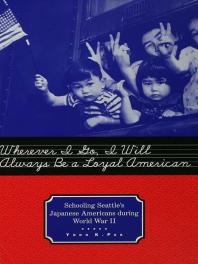
Wherever I Go I'll Always Be a Loyal American is the story of how the Seattle public schools responded to the news of its Japanese American (Nisei) students' internment upon the signing of Executive Order 9066 by President Franklin D. Roosevelt on February 14, 1942. Drawing upon previously untapped letters and compositions written by the students themselves during the time in which the bombing of Pearl Harbor and the internment order took place, Pak explores how the schools and their students attempted to cope with evident contradiction and dissonance in democracy and citizenship.
Judgment without Trial reveals that long before the 1941 attack on Pearl Harbor, the U.S. government began making plans for the eventual internment and later incarceration of the Japanese American population. Tetsuden Kashima uses newly obtained records to trace this process back to the 1920s, when a nascent imprisonment organization was developed to prepare for a possible war with Japan, and follows it in detail through the war years. Along with coverage of the well-known incarceration camps, the author discusses the less familiar and very different experiences of people of Japanese descent in the Justice and War Departments' internment camps that held internees from the continental U.S. and from Alaska, Hawaii, and Latin America.
America: History and Life covers the history and culture of the United States and Canada, from prehistory to the present. It indexes over 1,700 journals as far back as 1910. On Campus Guest Access
Interdisciplinary database for core journals in the fields of the arts & humanities, social sciences, and life sciences, providing archival access to each journal beginning with volume 1.
Covers a broad range of subjects including the arts, business, education, general interests, humanities, international topics, law, military, multicultural issues, psychology, the sciences, social sciences, and women's interests.
In 1942, President Roosevelt signed Executive Order 9066 that cleared the way for the incarceration of Japanese Americans in U.S. confinement camps. Men, women, and children of Japanese ancestry were evicted from the West Coast of the United States and held in sites across the country.
For more than 75 years, the story of Japanese Incarceration has been an untold chapter of American history. This documentary follows the politics of the country as WWII erupted — how American citizens of Japanese descent were affected, what their thoughts were in the face of Pearl Harbor and the declaration of war with Japan, Germany and Italy.
After the attack on Pearl Harbor, Franklin D. Roosevelt’s Executive Order 9066 violated the Constitution by imprisoning 120,000 Americans of Japanese ancestry in camps throughout the West for the duration of World War II. This documentary follows acclaimed animator Jimmy T. Murakami’s emotional return to Tule Lake, where he spent part of his childhood along with 18,000 Japanese-American citizens who refused to swear allegiance to the U.S.
ALTERNATIVE FACTS: The Lies of Executive Order 9066 is a documentary feature film about the false information and political influences which led to the World War ll incarceration of Japanese Americans. The film exposes the lies used to justify the decision and the cover-up that went all the way to the United States Supreme Court.